We Had to Leave
A sensitive, wordless story about a refugee family's journey.
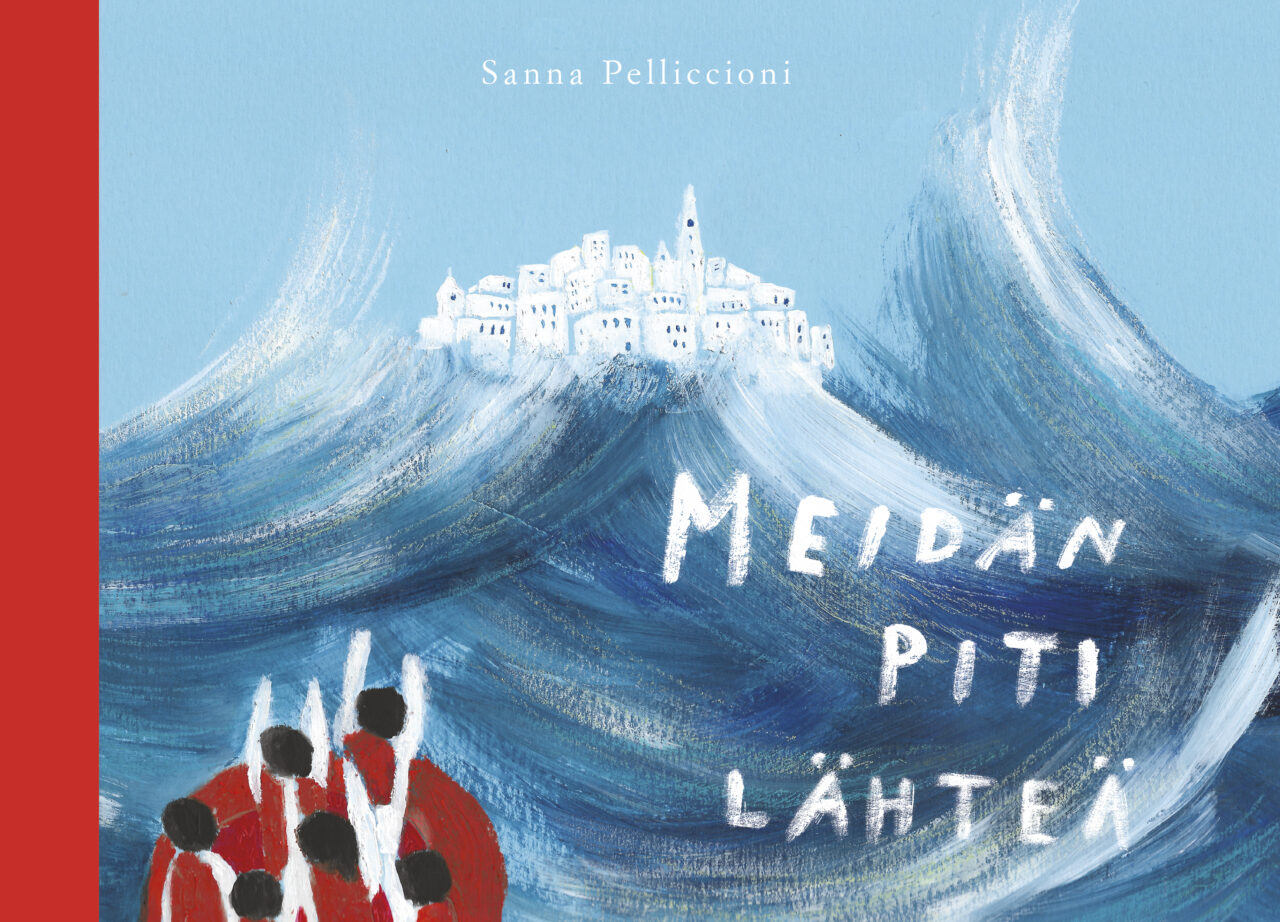
This wordless picture book tells the story of a family: at first, everything is fine, but then war breaks out and they have to flee. After a long journey, the family finds a new home.
Wordless picture books are often suitable for a wide range of ages and reading abilities. They have a long tradition, and their importance is growing with multiculturalism. Children can create a story based on their own experiences around the pictures, either on their own or together with an adult.
Immigrant children do not feel like outsiders because of unfamiliar text, but are able to read the book on an equal basis with everyone else. On the other hand, anyone can empathise with what it feels like to leave their home.
Publishing information
Reviews
“The picture book proves to be an excellent way to deal with the journey of a refugee family seeking asylum. The wordless story progresses beautifully thanks to Pelliccion's delicate expression. The topic may cause uncertainty in adult readers, but there is no need to explain things away; reading a picture book requires adults to be attentive.”
“We Had to Leave is a truly remarkable book, which I will definitely return to many times, both on my own and with my children. Pelliccioni has included a short text at the end of the book on how to read a wordless picture book with a child. It is essential to give children space to make their own interpretations and to proceed slowly. Children should have the opportunity to share their thoughts about the book, and there should be no rushing when reading it. It is no surprise that our children wanted to revisit certain parts of the book immediately, and just before bedtime, our middle child insisted, 'This book is ours, isn't it?'”
“Through Pelliccion's book, children can put into words and narrate the story of a family fleeing from war. The story of the refugee family resonates deeply with both children and the parents listening to the child's story. The core message of this wordless children's book is very insightful and even more relevant now than ever before.”